

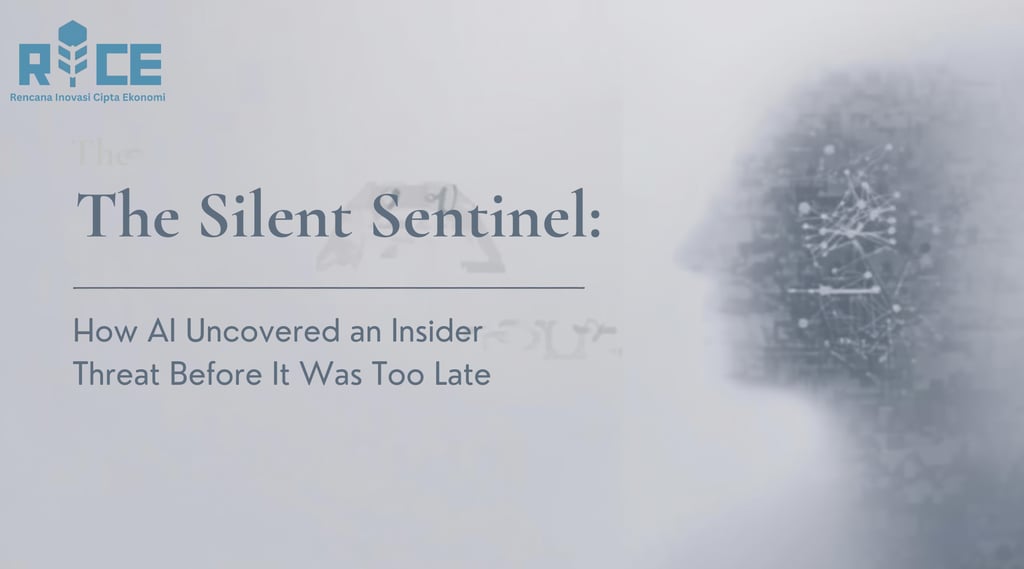
The Silent Sentinel: How AI Uncovered an Insider Threat Before It Was Too Late
Discover how AI, acting as a "Silent Sentinel," proactively identifies and neutralizes insider threats, transforming reactive security into a predictive stronghold.
TECHNOLOGY
Rice AI (Ratna)
1/15/20268 min read

The digital age, while offering unparalleled connectivity and innovation, simultaneously ushers in a new era of vulnerabilities. Among the most insidious threats organizations face today are those that come from within: insider threats. These aren't always the dramatic espionage plots seen in films; often, they are subtle, evolving patterns of behavior that can lead to catastrophic data breaches, intellectual property theft, or system sabotage. Traditional cybersecurity measures, while essential, frequently fall short in detecting these nuanced deviations from the norm.
This is where Artificial Intelligence (AI) emerges as the silent sentinel, standing guard where human vigilance and rule-based systems often struggle. AI’s ability to analyze vast datasets, learn normal operational patterns, and identify anomalous behaviors in real-time offers an unprecedented layer of defense. It transforms security from a reactive process into a proactive stronghold, capable of uncovering malicious intent or even inadvertent risks long before they escalate into irreparable damage. This case study explores how AI can detect an insider threat, ensuring critical assets remain secure.
The Evolving Landscape of Insider Threats
Insider threats represent a complex and multifaceted challenge for organizations across all industries. They exploit trust, knowledge, and authorized access, making them particularly difficult to detect using conventional methods. Understanding their nature is the first step toward effective defense.
Defining the Modern Insider Threat
An insider threat encompasses a broad spectrum of risks, from malicious actors intentionally seeking to harm an organization to negligent employees inadvertently creating vulnerabilities. This can include a disgruntled employee stealing intellectual property, a financially motivated individual selling sensitive data, or even a well-meaning employee falling victim to a phishing scam, thereby compromising credentials. The common thread is the misuse of legitimate access. The impact extends beyond immediate data loss, often leading to severe reputational damage, regulatory fines, and significant financial setbacks.
Why Traditional Security Fails
Traditional security infrastructures, built primarily on firewalls, intrusion detection systems (IDS), and signature-based antivirus, are designed to fend off external attacks. These systems excel at identifying known threats and enforcing predefined access policies. However, they are inherently limited when it comes to insider threats, as the actors already possess authorized access. They struggle to differentiate between legitimate and malicious activity when both originate from within the trusted network perimeter. Furthermore, the sheer volume of data and the subtlety of many insider behaviors overwhelm human analysts, leading to alarm fatigue and missed critical indicators. For a deeper dive into the nuances of internal risks, you can explore resources on types of insider threats.
The Rise of AI in Proactive Threat Detection
The shortcomings of traditional security have paved the way for advanced AI and machine learning techniques. These intelligent systems offer a paradigm shift, moving beyond static rules to dynamic, context-aware analysis. This enables an unparalleled ability to detect insider threats before they fully materialize.
Beyond Signatures: Behavioral Analytics
At the core of AI’s effectiveness in insider threat detection is User and Entity Behavior Analytics (UEBA). Unlike traditional systems that look for known bad signatures, AI-powered UEBA solutions establish a baseline of "normal" behavior for every user and entity within an organization. This baseline is built by continuously monitoring activities such as login times, access patterns to files and applications, data transfer volumes, and communication frequency. When an employee deviates from their established normal behavior—for instance, accessing sensitive files outside working hours, attempting to connect to unusual servers, or downloading an abnormally large volume of data—the AI flags these anomalies. These subtle shifts, often imperceptible to human eyes or rule-based systems, become crucial indicators. Machine learning algorithms continuously adapt, learning new patterns and refining their understanding of normal, ensuring accuracy and reducing false positives.
Predictive Capabilities
One of the most powerful advantages of AI is its predictive capacity. By correlating disparate data points across the entire IT ecosystem—including network logs, endpoint telemetry, application usage, and even HR system data—AI can identify precursor activities that suggest an impending threat. For example, a user attempting to access a personal cloud storage service while also researching competitor information, shortly after expressing dissatisfaction in a performance review, might individually seem innocuous. However, an AI system can connect these dots, assigning a higher risk score and flagging a potential insider threat scenario before any actual data exfiltration occurs. This ability to piece together a narrative from fragmented information allows organizations to intervene proactively, preventing a major incident rather than reacting to one. For insights into the broader applications of AI in strengthening digital defenses, consider reviewing recent research on AI in cybersecurity trends. This is where Rice AI shines, leveraging its sophisticated algorithms to provide comprehensive, multi-layered analysis that goes beyond simple anomaly detection.
A Real-World Scenario: The Case of "Project Phoenix"
To illustrate the tangible impact of AI in safeguarding critical assets, let's consider a hypothetical yet highly realistic scenario. This case, which we'll call "Project Phoenix," demonstrates the subtle insidious nature of insider threats and how AI acts as an invaluable early warning system.
The Initial Anomaly
The scenario began subtly within "Innovate Corp," a leading technology firm renowned for its groundbreaking R&D. Sarah, a senior software engineer with an exemplary record of ten years, started exhibiting minor, yet statistically significant, deviations from her established digital behavior. Initially, these included logging into the development server at unusual hours, specifically after midnight, two to three times a week. Separately, she began accessing archived project specifications for "Project Phoenix," a highly confidential initiative she wasn't directly assigned to, beyond her normal project scope. These actions, in isolation, might have been dismissed by human monitoring as "overtime work" or "curiosity." Traditional rule-based security systems, typically configured to alert on outright breaches or unauthorized access attempts, would have likely remained silent, as Sarah possessed valid credentials and access rights to the internal network.
AI's Multi-Layered Analysis
This is where Rice AI’s advanced platform, acting as the silent sentinel, came into play. Our AI system, continuously baselining Sarah’s historical behavior, immediately flagged these activities as low-level anomalies. The power of the system lies in its ability to fuse and correlate data from multiple, seemingly unrelated sources. Network logs indicated unusual data transfers from the development server to an internal staging environment that Sarah rarely used. Endpoint telemetry data showed a concurrent increase in the use of personal cloud storage services (e.g., Dropbox, OneDrive) on her corporate laptop, particularly during these late-night sessions.
The AI then layered this with data from other sources. HR system integration, for example, revealed Sarah had recently been passed over for a promotion and had updated her LinkedIn profile, signaling potential discontent or job searching. The system used unsupervised learning algorithms to detect patterns that fell outside the norm, not based on predefined rules, but on statistical rarity and contextual relevance. Rice AI's platform excels in this multi-faceted data fusion, providing a comprehensive risk score that escalated as more anomalous behaviors were detected. It didn't just see a login; it understood the context, the user’s history, and the sensitivity of the data being accessed.
From Anomaly to Actionable Intelligence
Over a period of three weeks, the Rice AI platform aggregated these low-level anomalies. What initially appeared as individual, benign actions began to form a coherent, high-risk narrative. The system generated a series of escalating alerts, culminating in a critical incident notification to Innovate Corp's security operations center (SOC). The AI's report detailed:
1. Unusual Access Patterns: Consistent late-night logins to a development server not directly related to her current projects.
2. Sensitive Data Access: Repeated access to "Project Phoenix" specifications, a highly confidential and proprietary initiative.
3. Data Staging: Movement of these sensitive files to a seldom-used internal staging environment.
4. Exfiltration Indicators: Concurrent, elevated usage of personal cloud storage services on her work device, a common precursor to data exfiltration.
5. Behavioral Context: Correlation with recent HR updates (promotion bypass, LinkedIn updates), suggesting potential motivation.
Crucially, the Rice AI platform didn't just present raw data; it presented a clear, prioritized narrative with a high-confidence risk score. This allowed the human security analysts to move beyond sifting through countless false positives, focusing their investigative efforts on a truly actionable insight. The security team, empowered by AI-generated intelligence, was able to discreetly monitor Sarah's activities, gather irrefutable evidence, and ultimately intervene before any intellectual property was irrevocably compromised or leaked externally.
The Impact and Lessons Learned
The successful identification and mitigation of the "Project Phoenix" threat underscore the transformative power of AI in cybersecurity. This incident provided Innovate Corp with invaluable insights, reinforcing the necessity of advanced security paradigms.
Preventing Catastrophe
The early detection facilitated by Rice AI's platform allowed Innovate Corp to act decisively and discreetly. Instead of discovering a devastating data breach after the fact, they were able to intercede before "Project Phoenix" intellectual property could be exfiltrated or monetized by Sarah. The potential losses prevented were immense, extending far beyond the immediate financial impact of data theft. A leak of such sensitive R&D would have severely compromised Innovate Corp's competitive advantage, eroded customer trust, and likely triggered significant stock market repercussions and regulatory investigations. The AI's intervention saved the company not just millions in potential damages but also preserved its reputation and the confidence of its stakeholders. It demonstrated a shift from costly incident response to intelligent threat prevention.
Strengthening Security Posture
The "Project Phoenix" case study highlighted the critical shift from a reactive security stance to a proactive, predictive one. Innovate Corp learned that relying solely on perimeter defenses and static rules was insufficient against sophisticated insider threats. Integrating AI meant their security systems were not only vigilant but also continuously learning and adapting. Each anomaly detected, whether malicious or benign, contributed to the AI's understanding of the organizational environment, making it smarter and more resilient over time. This continuous feedback loop ensures that the security posture evolves alongside emerging threats and changing user behaviors. Moreover, the case reinforced the importance of a symbiotic relationship between advanced technology and human expertise. AI provided the crucial intelligence, but human analysts still made the final decisions and conducted the delicate intervention. Rice AI offers expert consultation to tailor these sophisticated solutions to diverse organizational needs, ensuring a robust and adaptive security framework. For a broader understanding of effective defense strategies, exploring best practices for insider threat management is highly recommended.
Conclusion
The narrative of "The Silent Sentinel" at Innovate Corp is a powerful testament to the indispensable role of Artificial Intelligence in modern cybersecurity. Insider threats, often subtle and leveraging legitimate access, pose a unique and profound challenge that traditional defenses are ill-equipped to handle alone. AI, with its unparalleled ability to process vast amounts of data, identify anomalous behaviors through sophisticated behavioral analytics, and predict potential malicious intent, acts as an always-on, intelligent guardian. It moves organizations beyond the limitations of reactive security, offering a proactive shield against the most challenging threats.
The "Project Phoenix" scenario clearly demonstrates that the true value of AI lies not just in its ability to spot anomalies, but in its capacity to connect disparate data points, build coherent risk narratives, and provide actionable intelligence before a crisis unfolds. This translates directly into preventing devastating financial losses, protecting invaluable intellectual property, and safeguarding an organization's hard-earned reputation. The collaboration between intelligent AI systems and human security experts creates a synergy that is greater than the sum of its parts, allowing for precise interventions and continuous improvement in security posture.
In an increasingly interconnected and complex digital world, the question is no longer if organizations should embrace AI for insider threat detection, but how quickly. The cost of inaction far outweighs the investment in advanced, intelligent defenses. Don't wait for a crisis to strike; empower your defenses with intelligent AI. Contact Rice AI today for a consultation and discover how our solutions can protect your most valuable assets, providing the peace of mind and resilience necessary to thrive in the digital age. Embrace the silent sentinel and secure your future.
#AICybersecurity #InsiderThreat #DataSecurity #Cybersecurity #MachineLearning #AIProtection #RiskManagement #DigitalTransformation #SecurityAnalytics #ThreatDetection #EnterpriseSecurity #ProactiveSecurity #RiceAI #FutureOfSecurity #DailyAITechnology
RICE AI Consultant
To be the most trusted partner in digital transformation and AI innovation, helping organizations grow sustainably and create a better future.
Connect with us
Email: consultant@riceai.net
+62 822-2154-2090 (Marketing)
© 2025. All rights reserved.
+62 851-1748-1134 (Office)
IG: @riceai.consultant