


Shepherds of Silicon: The Unsung AI Success Story in Modern Livestock Management
Explore how AI is transforming livestock management, from predictive health to optimized feeding. Uncover the unsung success story of intelligent farming and its impact on welfare and efficiency.
INDUSTRIES
Rice AI (Ratna)
1/19/20268 min read
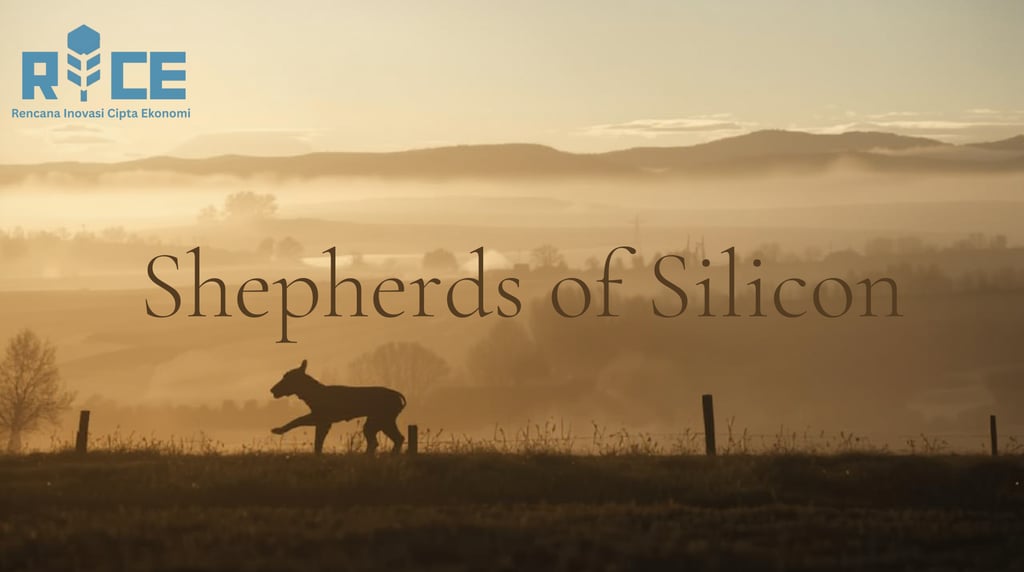
For millennia, the practice of animal husbandry remained fundamentally unchanged. Shepherds and farmers relied on astute observation, deep-seated intuition, and relentless physical labor to manage their herds. This ancient discipline, vital to human civilization, was characterized by inherent limitations: detecting subtle signs of illness, optimizing grazing patterns, and tracking individual animal welfare were tasks that demanded immense human effort and often yielded imperfect results. Today, we stand at the precipice of a new era, witnessing a profound transformation in livestock management, driven by the quiet, yet powerful, emergence of Artificial Intelligence. This shift represents one of the most remarkable, and often overlooked, success stories in modern AI application.
This article delves into how AI is redefining the role of the modern "shepherd," transitioning from traditional methods to sophisticated, data-driven strategies. We will explore the historical challenges that plagued animal agriculture, uncover the innovative AI technologies addressing these issues, examine the tangible benefits reaped by producers, and consider the future trajectory of this critical industry. The integration of AI is not merely an incremental improvement; it is a paradigm shift, cultivating smarter, more efficient, and ethically conscious livestock operations across the globe.
The Evolution of Animal Husbandry: From Manual Labor to Data-Driven Decisions
The journey of livestock management has been one of gradual progression, marked by incremental improvements over centuries. However, the dawn of the digital age has accelerated this evolution exponentially, introducing capabilities previously unimaginable. Understanding this trajectory is crucial to appreciating the profound impact of AI.
Early Challenges and the Persistent Need for Innovation
Historically, livestock farming was a high-risk endeavor, fraught with challenges that directly impacted productivity and profitability. Disease outbreaks could decimate entire herds, often going undetected until advanced stages. Nutritional deficiencies were difficult to diagnose and correct for individual animals, leading to suboptimal growth or milk production. Tracking individual animals within large herds was labor-intensive and prone to error, complicating breeding programs and health records. Pasture management relied heavily on visual assessment, leading to overgrazing or underutilization of land resources. These inherent inefficiencies underscored a persistent need for more precise, scalable, and responsive solutions.
The Digital Dawn: Paving the Way for Intelligent Systems
The first significant technological shifts began with the introduction of basic sensors and tracking devices. Radio-Frequency Identification (RFID) tags, for instance, offered a rudimentary way to identify individual animals automatically. Early motion sensors provided data on activity levels, hinting at potential health issues. While these technologies gathered valuable data, the sheer volume and complexity of this information quickly overwhelmed human analytical capabilities. Farmers found themselves drowning in data without the tools to convert it into actionable insights. This created a fertile ground for AI, which specializes in processing vast datasets and identifying patterns beyond human perception. It became clear that to truly unlock the potential of these digital inputs, an intelligent layer was required.
AI's Transformative Role: Precision Livestock Farming Unveiled
Artificial intelligence has ushered in the era of Precision Livestock Farming (PLF), a sophisticated approach that optimizes animal health, productivity, and welfare through continuous, real-time data analysis. This revolution extends across every facet of livestock management, from individual animal care to entire herd dynamics.
Predictive Health Monitoring: Detecting the Unseen
One of AI’s most impactful contributions is its ability to predict and prevent illness. Sophisticated algorithms analyze data from wearable sensors, acoustic monitoring devices, and visual cameras to detect subtle deviations in an animal's behavior, body temperature, heart rate, or vocalizations. These early warning signs often precede visible symptoms, allowing for timely intervention and preventing the spread of disease within a herd. For instance, changes in a cow’s rumination patterns, identified by AI, can signal digestive issues long before a farmer would notice any outward distress. This proactive approach significantly reduces treatment costs, minimizes animal suffering, and curbs economic losses from mortality or reduced production.
Optimized Nutrition and Feeding Regimes: Tailoring Every Meal
AI-powered systems are transforming how livestock are fed, moving beyond generalized feeding plans to highly individualized nutritional strategies. Cameras equipped with computer vision can assess an animal's body condition score, while sensors track feed intake and water consumption. AI algorithms then combine this data with factors like age, breed, weight, and production goals to recommend precise feed formulations and quantities. This tailored approach ensures optimal nutrient delivery, reducing feed waste, improving growth rates, and enhancing milk or meat quality. For dairy farms, for example, AI can adjust feed mixes to maximize milk yield while maintaining cow health, leading to substantial economic benefits.
Enhanced Breeding and Genetic Selection: A Smarter Future
Traditional breeding programs were often based on lineage records and visual assessments, a process that could be slow and inefficient. AI now revolutionizes genetic selection by analyzing vast genomic datasets alongside performance metrics from individual animals. Algorithms can identify the most desirable traits for productivity, disease resistance, and environmental adaptability with unprecedented accuracy. This enables farmers to make more informed breeding decisions, accelerating genetic improvement within their herds. Companies like Rice AI are developing advanced genetic analysis tools that empower breeders to predict offspring performance with higher confidence, paving the way for healthier, more resilient livestock generations. Our platforms utilize machine learning to identify optimal breeding pairs, thereby boosting herd vitality and market value.
Autonomous Pasture and Herd Management: Beyond the Fence
AI is extending its reach to automate and optimize large-scale herd management, particularly in extensive grazing systems. Drones equipped with AI-powered cameras can autonomously monitor vast pastures, identifying grazing patterns, detecting lost or injured animals, and assessing forage quality. Virtual fencing systems, guided by AI, use GPS and gentle auditory or haptic cues to keep animals within designated areas without physical barriers, reducing labor and infrastructure costs. Autonomous robots are also emerging for tasks like milking, cleaning, and even administering medication, minimizing human intervention and maximizing operational efficiency. These innovations contribute significantly to both sustainability and animal welfare by allowing livestock to graze more naturally and reducing human disturbance.
Real-World Impact: Case Studies and Success Metrics
The theoretical benefits of AI in livestock management are increasingly translating into tangible, measurable successes across the agricultural sector. From small family farms to large commercial operations, the adoption of AI is yielding remarkable improvements in efficiency, animal welfare, and profitability.
Increased Productivity and Efficiency: A Data-Driven Advantage
The implementation of AI systems consistently demonstrates significant boosts in productivity. Dairy farms using AI for individual cow monitoring report increased milk yields by an average of 5-10% due to optimized feeding and early health intervention. For beef operations, AI-driven insights into growth rates and feed conversion lead to faster market readiness and heavier, healthier animals. Poultry farms leverage AI to monitor environmental conditions and bird behavior, reducing mortality rates and improving feed efficiency. These improvements are directly attributable to the precision and foresight that AI brings to daily operations, turning raw data into concrete gains. The ability to forecast trends and identify anomalies with precision allows producers to make proactive decisions, minimizing waste and maximizing output.
Improved Animal Welfare: A Humane Evolution
Beyond economic benefits, AI plays a crucial role in enhancing animal welfare—a growing concern for consumers and producers alike. Early disease detection means animals receive treatment sooner, reducing suffering and preventing severe conditions. Optimized nutrition ensures animals are adequately fed for their specific needs, supporting robust health. Behavioral monitoring identifies stress or discomfort, prompting adjustments to the environment or management practices. For instance, AI can detect subtle signs of lameness in dairy cows, allowing intervention before the condition becomes debilitating. This proactive care not only improves the quality of life for the animals but also aligns with ethical farming practices, strengthening consumer trust in the industry.
Economic Benefits for Producers: From Costs to Profits
The financial advantages of integrating AI into livestock management are multifaceted. Reduced labor costs, decreased veterinary expenses, and lower feed waste contribute to significant operational savings. Simultaneously, increased productivity, improved product quality, and reduced mortality rates lead to higher revenues. One study showed that AI-driven precision feeding could reduce feed costs by up to 15% while improving animal performance. The enhanced data collection also allows for better record-keeping and compliance with regulations, reducing risks of fines or market access issues. Companies partnering with Rice AI have seen average returns on investment within two years, demonstrating the clear economic viability of these intelligent solutions. Our platforms are designed to provide clear, actionable insights that directly translate into improved bottom lines for our clients.
Overcoming Hurdles: Adoption, Ethics, and the Future Frontier
While the benefits of AI in livestock management are compelling, widespread adoption still faces challenges. Addressing these hurdles, alongside considering the ethical implications, will be critical for the continued success and responsible growth of this transformative technology.
Addressing Implementation Challenges: Bridging the Gap
The transition to AI-driven farming is not without obstacles. High initial investment costs for sensors, cameras, and software can be a barrier for smaller operations. Connectivity issues in remote agricultural areas can hinder real-time data transmission and analysis. Perhaps most significantly, there is a learning curve for farmers who must adapt to new technologies and integrate data analysis into their daily routines. Training and support are vital to ensure successful implementation. Solutions must be user-friendly and offer clear value propositions to overcome resistance to change. Initiatives focusing on accessible technology, robust rural broadband, and comprehensive educational programs are essential to broaden AI adoption.
Ethical AI in Animal Agriculture: A Balanced Approach
The integration of AI also raises important ethical considerations. Questions around data privacy, especially when personal farmer data is combined with animal data, need clear policies. The potential for algorithmic bias, where AI systems inadvertently favor certain animals or breeds, must be mitigated to ensure equitable care. There are also broader philosophical discussions about the extent of automation and its impact on the traditional role of human interaction with animals. Ensuring transparency in AI's decision-making processes, upholding animal autonomy where appropriate, and designing systems that genuinely enhance welfare, rather than merely optimize production, are paramount. Responsible AI development demands a balanced approach that prioritizes both efficiency and ethics.
The Road Ahead: Emerging AI Trends and Rice AI's Vision
The future of AI in livestock management is rich with potential, characterized by continuous innovation. We can anticipate more sophisticated predictive analytics, incorporating broader environmental data for hyper-localized insights. The development of advanced robotics will likely lead to fully autonomous farm operations for certain tasks, further reducing labor demands and increasing precision. Federated learning, which allows AI models to learn from decentralized data sources without centralizing sensitive information, could address data privacy concerns and accelerate collective intelligence across the industry. Rice AI is actively investing in research and development to lead these advancements. Our vision extends to creating integrated, intelligent ecosystems that not only optimize every aspect of livestock farming but also contribute to global food security and sustainable agricultural practices. We believe in harnessing the power of AI to build a more resilient, humane, and profitable future for the world's farmers and their animals. We continually strive to provide cutting-edge solutions that are both powerful and user-friendly, ensuring that the benefits of advanced AI are accessible to all.
Conclusion: The New Frontier of Intelligent Farming
The narrative of "Shepherds of Silicon" is a testament to the quiet revolution reshaping one of humanity's oldest professions. AI is no longer a futuristic concept but a vital, operational partner in modern livestock management, bringing unprecedented levels of precision, efficiency, and humane care to farms worldwide. From predictive diagnostics to optimized feeding and autonomous herd monitoring, AI's applications are vast and growing, creating a more sustainable and productive agricultural landscape.
This technological leap empowers producers to overcome long-standing challenges, driving economic prosperity while significantly elevating animal welfare standards. The ongoing advancements in machine learning, computer vision, and robotics promise an even more integrated and intelligent future for livestock farming. While challenges related to adoption and ethics remain, the commitment to responsible innovation is paving the way for solutions that benefit animals, farmers, and consumers alike.
For industry experts and professionals navigating this dynamic field, understanding and embracing these AI advancements is not merely an advantage—it is a necessity. The future of food production hinges on our ability to leverage these powerful tools intelligently and ethically. Are you ready to lead the charge in this intelligent agricultural revolution? Explore how Rice AI's pioneering solutions can empower your operations, transform your livestock management, and secure your place at the forefront of sustainable, precision farming. Partner with us to unlock the full potential of AI for your agricultural enterprise.
#AIFarming #LivestockManagement #PrecisionAgriculture #SmartFarming #AgriculturalTech #AnimalWelfare #FutureOfFarming #AgriTech #MachineLearning #FarmAutomation #DigitalAgriculture #SustainableFarming #RiceAI #InnovationInAgriculture #DataDrivenFarming #DailyAIIndustry
RICE AI Consultant
To be the most trusted partner in digital transformation and AI innovation, helping organizations grow sustainably and create a better future.
Connect with us
Email: consultant@riceai.net
+62 822-2154-2090 (Marketing)
© 2025. All rights reserved.


+62 851-1748-1134 (Office)
IG: @riceai.consultant