

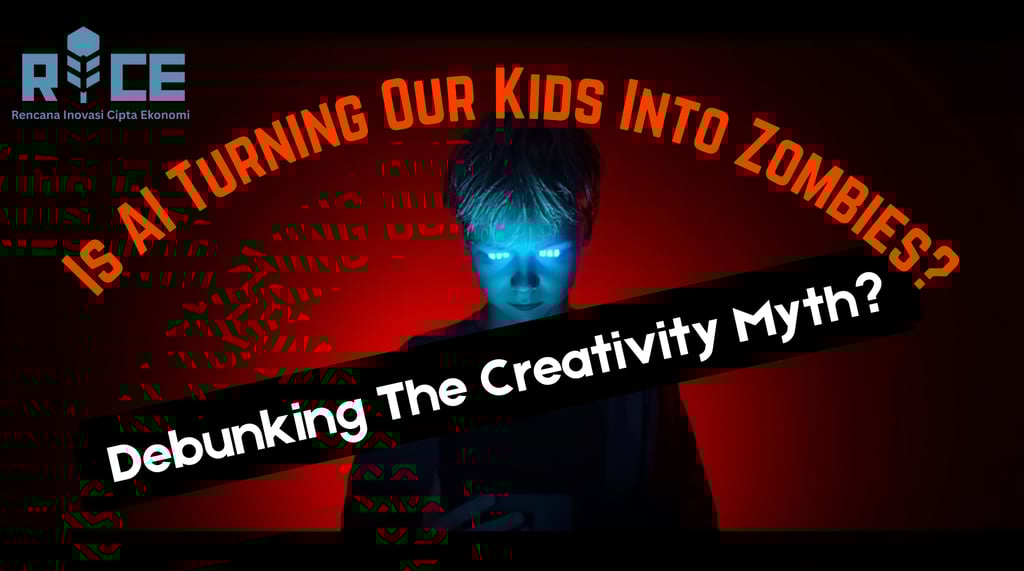
Is AI Turning Our Kids Into Screen Zombies? Debunking the Creativity Myth
Discover how thoughtful AI integration empowers personalized learning, boosts critical thinking, and transforms kids into innovative creators
AI INSIGHT
Rice AI
1/27/20266 min read

The digital age has ushered in an era of unprecedented connectivity and innovation, yet it also brings a wave of anxieties, especially for parents. A common fear echoes through playgrounds and parent forums: Is artificial intelligence turning our children into "screen zombies," stifling their innate creativity and imagination? This concern, while understandable, often oversimplifies the complex interaction between children, technology, and learning. It’s time to move beyond the alarmist headlines and delve into a more nuanced understanding of how AI, when properly guided, can actually be a powerful catalyst for enhancing creativity and critical thinking in the next generation.
The narrative of AI as a creativity killer overlooks its potential as a dynamic tool. We must shift our perspective from passive consumption to active, intentional engagement. Instead of fearing the screen, we should explore how AI applications can unlock new dimensions of learning and creative expression. The future of innovation relies on individuals who can effectively partner with intelligent systems, not retreat from them.
The Screen Time Dilemma: More Than Meets the Eye
The term "screen time" itself often conjures images of passive, unengaged children staring blankly at devices. However, this broad categorization fails to capture the diverse range of activities screens facilitate. The quality and nature of digital engagement are far more significant than the sheer quantity of hours logged. Understanding this distinction is crucial to debunking the creativity myth.
Distinguishing Passive Consumption from Active Engagement
Not all screen time is created equal. There's a vast difference between mindlessly scrolling through videos and actively designing a virtual world using AI-powered tools. Passive consumption, like endless streaming, offers minimal cognitive stimulation. In contrast, active engagement involves problem-solving, decision-making, and creative output.
AI applications can transform screen time from a passive experience into an interactive one. They can provide platforms for coding, digital art, music composition, and even complex storytelling. These activities demand critical thinking and imaginative input from the child.
The Evolving Landscape of Childhood Play
Traditional play has always been fundamental for development, fostering imagination and social skills. However, the definition of "play" is expanding in the digital age. Digital play, when thoughtfully curated, offers unique opportunities that complement traditional forms.
AI-enhanced games or creative suites can provide virtual sandboxes for experimentation. Children can test hypotheses, build intricate systems, and collaborate with peers globally. This new landscape requires parents and educators to understand the potential of digital environments.
AI as a Catalyst for Creative Exploration
Far from stifling creativity, artificial intelligence offers groundbreaking avenues for children to explore and develop their imaginative capabilities. AI's capacity for personalization and rapid iteration makes it an unparalleled partner in the creative process. It can help children discover passions and develop skills in ways previously unimaginable.
Personalized Learning and Idea Generation
One of AI's most powerful attributes is its ability to personalize learning experiences. AI algorithms can adapt to a child's individual pace, interests, and learning style. This tailored approach keeps children engaged and challenged, preventing boredom and fostering a deeper connection to creative tasks. Imagine an AI tutor suggesting new story prompts based on a child's favorite themes, or an AI music generator helping them compose a melody that matches their mood.
These personalized interactions spark curiosity and provide scaffolding for complex ideas. AI can act as a tireless brainstorming partner, offering variations, suggestions, and perspectives a child might not otherwise consider. This iterative process of idea generation is core to creativity. Our team at Rice AI focuses on developing intuitive AI educational tools that empower young minds to innovate, explore, and push the boundaries of their imagination without feeling overwhelmed. We believe in providing AI solutions that genuinely enhance the learning journey, making it both engaging and creatively productive for every child.
Empowering Young Creators with AI Tools
AI tools are transforming how children can express themselves creatively. From AI art generators that turn simple doodles into elaborate masterpieces to coding platforms that use AI to suggest code snippets, the barriers to creation are falling. These tools don't replace human ingenuity; they augment it.
Children can experiment with different styles, colors, and forms using AI art programs, learning about aesthetics in the process. AI-powered storytelling platforms can help them develop narratives, characters, and plot twists, encouraging literary development. These experiences teach children that technology is a powerful tool for bringing their imaginative visions to life.
Nurturing Critical Thinking in an AI-Driven World
The development of critical thinking skills is paramount in an increasingly AI-permeated world. Rather than rendering these skills obsolete, AI necessitates their refinement. Children need to learn how to interact with AI intelligently, understanding both its capabilities and its limitations. This interaction becomes a crucial pathway to advanced cognitive development.
Beyond Memorization: AI for Problem-Solving
Traditional education often emphasized memorization, but AI handles data recall with unparalleled efficiency. This frees up educational focus for higher-order thinking skills like problem-solving, analysis, and synthesis. When AI performs the rote tasks, children can concentrate on understanding why solutions work and how to apply concepts.
AI can present complex problems and assist children in navigating potential solutions. They can evaluate AI-generated answers, identify flaws, and refine approaches. This process cultivates a critical mindset, teaching children to question, analyze, and innovate rather than just accept. It’s about learning to leverage AI as a tool for deeper inquiry.
Ethical AI and Digital Literacy
Engaging with AI also provides a vital opportunity to teach digital literacy and ethical considerations. Children need to understand how AI systems learn, the potential for bias in their outputs, and the importance of responsible use. This knowledge equips them to be discerning consumers and ethical creators of AI-driven content.
Teaching children to critically evaluate AI-generated information fosters a healthy skepticism. They learn to ask questions like: "Where did this AI get its data?" or "Are there unintended consequences of this AI's actions?" This empowers them to navigate the digital world thoughtfully and responsibly.
Strategies for Parents and Educators: Guiding Digital Natives
The key to harnessing AI's potential for creativity and critical thinking lies in mindful guidance from parents and educators. It's not about prohibiting AI, but about strategically integrating it into a balanced developmental framework. Our role is to model responsible technology use and to foster a curious, exploratory mindset.
Active Participation and Co-Creation
Parents and educators should move beyond mere supervision and engage actively with children in AI-powered activities. Joining in on creative projects, exploring AI tools together, and discussing the outcomes transforms screen time into a collaborative learning experience. This shared exploration demonstrates the value of curiosity and critical engagement.
By co-creating, adults can model problem-solving strategies and encourage deeper reflection. This interaction provides an opportunity to discuss the "how" and "why" behind AI's outputs, fostering a more profound understanding than passive observation alone. It makes learning with AI a shared adventure.
Balancing Digital and Analog Experiences
While AI offers incredible opportunities, it's crucial to maintain a balance with traditional, analog experiences. Outdoor play, reading physical books, hands-on arts and crafts, and face-to-face social interactions remain indispensable for holistic child development. AI should complement, not replace, these foundational activities.
The goal is to cultivate a diverse "developmental diet" that includes both digital and non-digital learning. Rice AI provides resources and insights for parents and educators seeking to thoughtfully integrate AI into a comprehensive educational strategy, ensuring children develop a broad range of skills and experiences. We advocate for a blend that prepares children for a future where both digital fluency and traditional human skills are highly valued.
Curating Quality AI Experiences
Not all AI applications are created equal. Parents and educators must become discerning curators of digital content and tools. Prioritize AI apps that are designed for genuine engagement, learning, and creative output over those that promote passive consumption or addictive scrolling behaviors. Look for platforms that encourage experimentation, offer open-ended challenges, and provide constructive feedback.
Research and review AI educational products, checking for age-appropriateness, privacy policies, and pedagogical soundness. Engaging with reputable sources and expert recommendations can help ensure children are interacting with high-quality AI experiences that truly enhance their growth.
The Future of Childhood Creativity with AI
The narrative that AI transforms children into "screen zombies" by destroying their creativity is a myth that requires urgent debunking. While concerns about excessive or unguided screen time are valid, framing AI solely as a detriment overlooks its immense potential. Artificial intelligence, when approached with intention and guidance, is not a threat to childhood creativity but a powerful enabler. It offers personalized learning paths, unprecedented tools for creative expression, and vital opportunities to develop critical thinking skills essential for the 21st century.
The future will demand individuals who are not only digitally literate but also creatively agile and critically discerning in their interaction with intelligent systems. By embracing AI as a co-creator and a learning partner, we equip our children with the skills to navigate and shape a world increasingly influenced by artificial intelligence. The responsibility falls on parents and educators to model thoughtful engagement, curate enriching experiences, and foster a balanced approach to technology. Let us not fear the tools of tomorrow but instead learn to wield them wisely, transforming potential "screen zombies" into imaginative innovators.
We invite you to explore how Rice AI is committed to building AI solutions that inspire creativity, foster critical thinking, and empower the next generation. Discover our resources and tools designed to make AI a positive force in your child's educational journey. Join us in shaping a future where AI enhances, rather than diminishes, human potential.
#AICreativity #KidsAndAI #FutureOfLearning #ScreenTimeDebunked #ParentingInTheAIage #DigitalLiteracy #EdTech #ChildDevelopment #CriticalThinking #Innovation #RiceAI #AIforKids #CreativeKids #FutureReady #DailyAIInsight
RICE AI Consultant
To be the most trusted partner in digital transformation and AI innovation, helping organizations grow sustainably and create a better future.
Connect with us
Email: consultant@riceai.net
+62 822-2154-2090 (Marketing)
© 2025. All rights reserved.

+62 851-1748-1134 (Office)
IG: @riceai.consultant