


Beyond the Headset: Debunking the Myth That Metaverse Begins and Ends with VR Hardware
Discover its true scope as a persistent, AI-powered digital universe, accessible across diverse devices and industries.
TECHNOLOGY
Rice AI (Ratna)
12/29/20257 min read
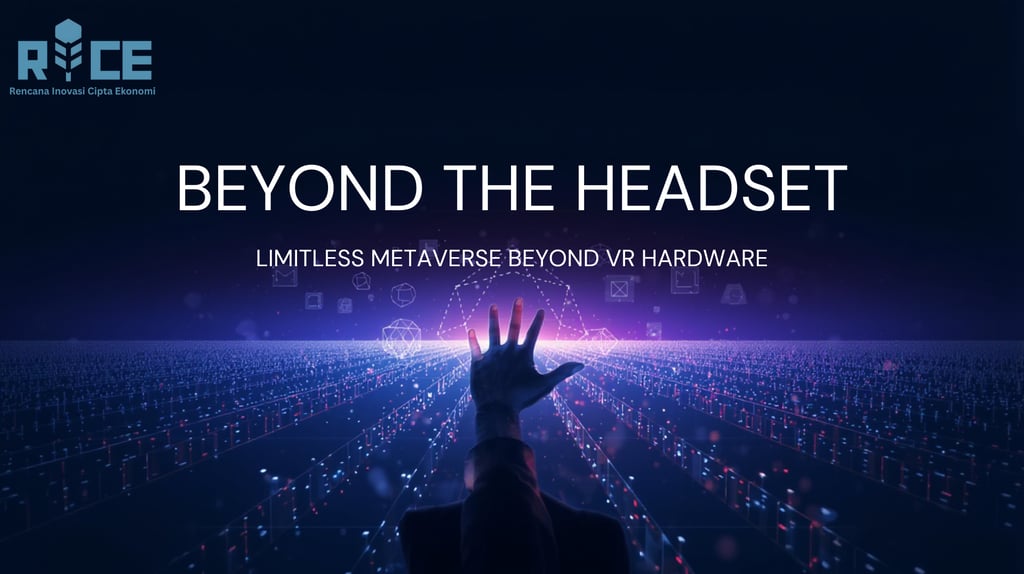
The concept of the metaverse has captivated the world, promising a new era of digital interaction and experience. However, a significant misconception persists: many equate the metaverse exclusively with virtual reality (VR) headsets. This narrow view severely limits understanding its true scope and potential. The reality is far more expansive, encompassing a vast, interconnected digital landscape that transcends specific hardware.
To truly grasp the metaverse, we must move beyond the visual interface of a headset. The metaverse is not merely a destination accessed through VR; it's a fundamental shift in how we interact with digital content, commerce, and community, built on a foundation of diverse technologies and accessible through myriad devices. At Rice AI, our work in artificial intelligence consistently demonstrates that the intelligent components powering these environments are far more critical than any single access point.
The Metaverse: More Than Just a Visual Interface
The prevailing image of the metaverse often involves someone donning a bulky VR headset, instantly transported to a hyper-realistic virtual world. While VR is undeniably a powerful and immersive gateway, it represents only one facet of a much larger, more intricate ecosystem. The metaverse is an idea, a digital evolution, not a proprietary piece of equipment.
Defining the True Metaverse
The metaverse is best understood as a persistent, interconnected, and interoperable network of 3D virtual worlds, fostering real-time interactions among users and digital objects. Unlike isolated online games or applications, the metaverse aims for a seamless flow of digital assets, identities, and experiences across different platforms. It’s a space where your digital avatar, purchased items, and even learned skills can potentially move with you from one virtual environment to another. This persistence and interoperability, rather than the display technology, are the core defining characteristics of a true metaverse.
The Role of Underlying Technologies
Beneath the surface of any metaverse experience lies a complex interplay of advanced technologies that enable its existence. Blockchain technology, for instance, provides the backbone for digital ownership, verifiable scarcity, and secure transactions through non-fungible tokens (NFTs). This ensures that digital assets, from virtual land to unique wearables, hold tangible value and can be truly owned by users, fostering new forms of digital economies. Artificial intelligence (AI) is another critical, often overlooked, component. AI powers dynamic content generation, intelligent non-player characters (NPCs), personalized user experiences, and sophisticated analytics. For example, Rice AI's advanced AI solutions are crucial for building intelligent metaverse environments that can adapt and evolve in real-time, making interactions more natural and responsive. Furthermore, robust cloud computing infrastructure is essential for hosting these massive, persistent worlds, ensuring real-time processing and scalability for millions of concurrent users.
Diverse Entry Points: Accessing the Metaverse
The myth that the metaverse begins and ends with VR hardware is often perpetuated because VR offers the most deeply immersive experience currently available. However, immersion is not synonymous with the metaverse itself. Accessibility is paramount for broad adoption, and limiting access to specialized VR gear would severely restrict its potential reach.
PCs, Consoles, and Mobile Devices
Today, many of the most prominent metaverse platforms are already widely accessible via traditional devices. Platforms like Roblox, Fortnite, Decentraland, and The Sandbox thrive on user engagement through desktop PCs, gaming consoles, and even mobile smartphones. These environments offer rich, interactive experiences, robust social features, and burgeoning digital economies without requiring a VR headset. Users can build, socialize, trade, and create within these digital worlds, proving that the metaverse is very much alive and accessible through everyday screens. The ubiquity of these devices means billions can already participate in metaverse-like experiences, gradually transitioning them towards the more expansive vision.
Augmented Reality (AR) as a Bridge
Augmented reality (AR) represents another crucial, yet distinct, pathway into the metaverse. Unlike VR, which transports users entirely into a digital world, AR overlays digital content onto the real world, enhancing our existing environment. From smartphone apps like Pokémon Go that blend digital creatures with physical locations to sophisticated industrial AR glasses used for maintenance and training, AR creates a mixed reality experience. This technology acts as a vital bridge, extending the digital realm into our physical lives. AR experiences are often interactive and persistent, aligning perfectly with the metaverse's core tenets, and demonstrating that immersive doesn't always mean fully virtual. The evolution of lightweight AR glasses promises even more seamless integration of digital information into our daily lives, without isolating us behind opaque VR lenses.
The Economic and Social Fabric of the Metaverse
Beyond the technological infrastructure and access points, the metaverse is fundamentally shaped by its economic models and social interactions. These aspects are deeply intertwined and represent a significant departure from traditional online experiences, driving much of its transformative potential. The underlying principles of ownership and community are what truly give the metaverse substance, independent of how one chooses to view it.
Digital Economies and Ownership
A defining feature of the metaverse is its vibrant and often decentralized digital economy. This economy is built on principles of digital ownership, primarily facilitated by blockchain technology and NFTs. Users can truly own virtual land, digital art, exclusive avatars, and unique in-game items, which can be bought, sold, and traded for real-world value. This concept of verifiable digital ownership is revolutionary, allowing for robust virtual real estate markets, a booming creator economy, and entirely new business models. It empowers users and creators in unprecedented ways, shifting from traditional licensing to genuine asset ownership. Understanding these economic underpinnings is crucial for any business looking to enter the digital frontier. Rice AI's analytics tools, for instance, help businesses navigate and optimize their strategies within these new digital economies, leveraging AI for market predictions, user behavior analysis, and fraud detection, ensuring sustainable growth.
Social Interaction and Community Building
The metaverse is, at its heart, a social space. It aims to foster deeper, more engaging forms of social interaction than traditional 2D social media platforms. Users can attend virtual concerts, participate in collaborative workspaces, hold meetings, and build communities with shared interests, all within persistent digital environments. The ability to express identity through highly customizable avatars and engage in real-time, spatial audio conversations creates a sense of presence and connection that goes beyond mere text or video calls. These communities can span geographical boundaries, offering new avenues for friendship, collaboration, and shared experiences. The social fabric of the metaverse is a testament to its potential to redefine human connection in the digital age, offering a sense of belonging and agency within a shared virtual space.
Beyond Entertainment: Practical Applications and Future Trends
While gaming and social experiences often dominate the public discourse around the metaverse, its true impact will extend far beyond entertainment. Forward-thinking enterprises are already exploring and implementing metaverse technologies to solve real-world problems, drive innovation, and enhance operational efficiencies across various industries. This practical application underscores the metaverse's breadth and long-term significance, proving it’s more than just a consumer gadget.
Enterprise and Industry Applications
The enterprise metaverse is rapidly emerging as a powerful tool for business transformation. Industries are leveraging these immersive digital spaces for a multitude of applications. For example, manufacturing companies are using digital twins – virtual replicas of physical assets, processes, or systems – for predictive maintenance, product design, and operational optimization. Healthcare providers can conduct remote surgical training, simulate complex procedures, and offer virtual therapy sessions. Retailers are creating virtual showrooms, allowing customers to try on clothes or visualize furniture in their homes using AR. These applications lead to significant efficiency gains, cost reductions, and enhanced collaboration among globally distributed teams. The ability to simulate, visualize, and interact within a digital context offers unparalleled opportunities for innovation and problem-solving, far removed from consumer-grade VR games.
The Future of Metaverse Evolution
The metaverse is not a static destination but an evolving concept, continually shaped by technological advancements. Looking ahead, we can anticipate even greater integration of artificial intelligence for creating more adaptive, intelligent, and personalized environments. Imagine AI-powered digital agents that can anticipate your needs, environments that dynamically respond to your emotions, or content that is instantly generated to suit your preferences. Seamless cross-platform interoperability will become the norm, allowing for truly fluid transitions between different virtual worlds and experiences. Digital identities will become more sophisticated, perhaps incorporating biometric data or advanced AI to create truly lifelike digital representations. The future metaverse will blend physical and digital realms more seamlessly, becoming an integral layer of our reality, rather than a separate, screen-bound experience. Rice AI is at the forefront of developing the advanced AI solutions that will power these future metaverse capabilities, from sophisticated digital twin simulations to hyper-personalized user experiences, ensuring that the metaverse becomes an intelligent and intuitive space.
Conclusion
The notion that the metaverse is synonymous with VR hardware is a pervasive myth that does a disservice to the transformative potential of this evolving digital frontier. While virtual reality headsets offer a profoundly immersive gateway, they are merely one of many access points to a concept that is far grander in scope. The metaverse is a persistent, interconnected ecosystem of digital worlds and experiences, powered by a convergence of technologies like AI, blockchain, and cloud computing, and accessible across a multitude of devices, from PCs and mobile phones to augmented reality glasses.
Understanding the metaverse means recognizing its fundamental components: the digital economies driven by verifiable ownership (NFTs), the intricate social fabric fostering global communities, and the boundless potential for enterprise innovation through applications like digital twins and remote collaboration. It's a fundamental paradigm shift in how we interact with digital information, engage in commerce, and connect with one another, extending far beyond the visual confines of a single piece of hardware. The true power of the metaverse lies in its interoperability, persistence, and the intelligent layers that allow for dynamic, personalized experiences.
As we move forward, the metaverse will continue to evolve, becoming increasingly intelligent, accessible, and integrated into our daily lives. To truly prepare for this future, it is crucial to adopt a holistic perspective, acknowledging that VR is a powerful interface, but not the entirety of this expansive digital universe. Embrace the broader implications, explore multi-platform experiences, and consider how your organization can leverage the intelligent infrastructure that underpins this next wave of digital transformation. At Rice AI, we are committed to building the intelligent infrastructure that powers this expansive digital frontier. Our expertise in AI and metaverse technologies positions us to guide businesses through this transformative era. Connect with us to explore how AI can unlock the true potential of your metaverse strategy.
#Metaverse #VR #AugmentedReality #AI #ArtificialIntelligence #DigitalTransformation #Blockchain #NFTs #VirtualWorlds #EnterpriseMetaverse #FutureTech #DigitalEconomy #ImmersiveExperiences #TechDebunked #RiceAI #DailyAITechnology
RICE AI Consultant
To be the most trusted partner in digital transformation and AI innovation, helping organizations grow sustainably and create a better future.
Connect with us
Email: consultant@riceai.net
+62 822-2154-2090 (Marketing)
© 2025. All rights reserved.


+62 851-1748-1134 (Office)
IG: @riceai.consultant