

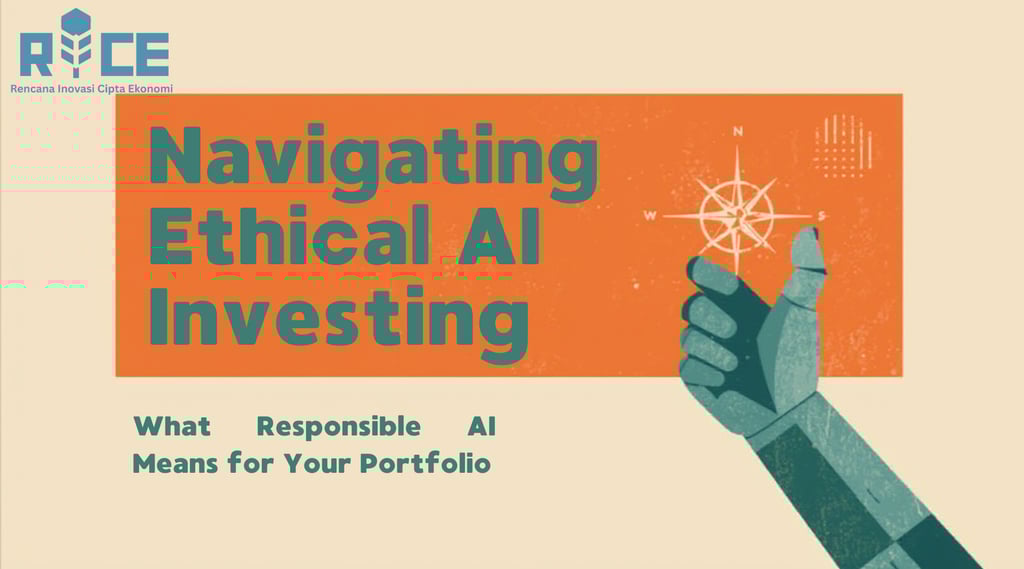
Navigating the Ethical AI Investment Landscape: What Responsible AI Means for Your Portfolio
This post explores what responsible AI means for your portfolio, detailing key principles, tangible impacts, and strategies to integrate ethics into your investment decisions.
AI INSIGHT
Rice AI (Ratna)
3/12/20267 min read
The rapid acceleration of Artificial Intelligence (AI) adoption is undeniably reshaping every industry, from finance to healthcare, manufacturing to entertainment. Yet, as AI systems become more sophisticated and deeply embedded in our daily lives and business operations, they introduce profound ethical questions. For investors, the "ethical AI dilemma" is no longer a peripheral concern; it's a critical factor demanding careful consideration, influencing everything from risk assessment to long-term value creation.
Responsible AI is transitioning from a niche academic topic to a cornerstone of sustainable investment viability. The era of evaluating AI purely on performance metrics is evolving, now demanding the integration of robust ethical considerations. Ignoring these ethical dimensions means overlooking potential liabilities, reputational damage, and significant market shifts. As an industry expert, I contend that understanding and prioritizing responsible AI practices is paramount for safeguarding and growing your investments in the AI-driven future.
The Core Pillars of Responsible AI for Investors
What does "responsible AI" truly entail when viewed through an investment lens? It’s a multi-faceted concept encompassing several key principles designed to ensure AI systems are developed and deployed in a manner that benefits society without causing undue harm. For investors, these pillars represent critical areas for due diligence and risk assessment.
Transparency and Explainability
One of the most persistent criticisms of advanced AI, particularly machine learning models, is their "black box" nature. Transparency and explainability refer to the ability to understand how an AI system arrives at its decisions or recommendations. From an investment perspective, this is crucial. Consider an AI used for credit scoring: if its logic is opaque, it becomes impossible to identify and rectify biases, leading to regulatory scrutiny and potential legal challenges. Similarly, in algorithmic trading, understanding the underlying rationale of an AI can prevent catastrophic errors and foster investor confidence. Companies prioritizing explainable AI are demonstrating a commitment to accountability, reducing black box risks and building trust.
Fairness and Bias Mitigation
AI systems are trained on data, and if that data reflects existing societal biases, the AI will inevitably perpetuate or even amplify those biases. An AI designed for hiring, for example, could inadvertently discriminate against certain demographics if trained on historical hiring data that favored specific groups. For investors, the implications of unfair AI are severe. Beyond the ethical considerations, biased AI can lead to significant reputational damage, costly lawsuits, regulatory fines, and widespread market rejection. Investing in companies that actively implement strategies for bias detection, measurement, and mitigation is essential for mitigating these substantial risks.
Accountability and Governance
Who is responsible when an AI system makes a harmful decision? Establishing clear accountability for AI outcomes is a fundamental aspect of responsible AI. Effective AI governance involves putting robust oversight frameworks in place that define roles, responsibilities, and decision-making processes regarding AI development and deployment. This includes internal policies, independent ethics boards, and clear mechanisms for redress. For investors, strong AI governance signals a company's maturity in managing cutting-edge technology, minimizing unforeseen liabilities, and demonstrating a commitment to ethical operations, crucial for navigating emerging regulatory landscapes.
Data Privacy and Security
AI thrives on data, but its use must respect individual privacy and maintain robust security. The ethical collection, storage, processing, and application of data are non-negotiable. This extends beyond basic compliance with regulations like GDPR or CCPA to proactive measures such as privacy-preserving AI techniques (e.g., federated learning, differential privacy). Companies that demonstrate lax data privacy practices or suffer from repeated data breaches face significant financial penalties, legal action, and a severe erosion of customer trust. For investors, scrutinizing a company's approach to AI data privacy and cybersecurity is paramount to assessing its long-term stability and integrity.
The Tangible Impact of Ethical AI on Investment Performance
The integration of ethical AI principles is not merely a moral imperative; it directly translates into tangible financial impacts, influencing both risk and opportunity within an investment portfolio. Modern investors are increasingly recognizing that neglecting AI ethics is a direct threat to value, while embracing it can be a significant differentiator.
Risk Mitigation and Value Preservation
Unethical AI practices pose substantial risks that can quickly erode shareholder value. Consider a major tech company that faces a class-action lawsuit for discriminatory algorithms, or a financial institution hit with hefty fines for AI systems that unfairly target vulnerable populations. The legal costs, regulatory penalties, and the catastrophic impact on brand reputation can be devastating. Boycotts by consumers, loss of partnerships, and a significant drop in market capitalization are real possibilities. Investors conducting thorough due diligence must now extend their analysis beyond traditional financial metrics to rigorously assess a company's AI ethics posture. Ignoring these AI risks is akin to overlooking fundamental business risks in any other sector.
Opportunities for Growth and Innovation
Conversely, companies that champion ethical AI are poised to unlock new avenues for growth and innovation. They attract a growing segment of conscious consumers who prefer brands demonstrating social responsibility. This commitment also makes them magnets for top talent in the AI space, who increasingly seek to work on projects with a positive societal impact. Ethical AI can become a powerful competitive advantage, fostering trust and loyalty, which are invaluable in a crowded market. These firms can develop more robust, resilient, and socially acceptable AI solutions, leading to market leadership and superior long-term performance. Investors actively seeking sustainable investing opportunities will find ethical AI leaders compelling.
Regulatory Scrutiny and Future-Proofing Portfolios
The regulatory landscape for AI is rapidly evolving globally. Initiatives like the European Union's AI Act, the NIST AI Risk Management Framework in the U.S., and numerous national guidelines are moving towards establishing legal and ethical guardrails for AI development and deployment. Companies that proactively invest in robust AI governance and adhere to emerging ethical standards are better positioned to navigate this complex environment. For investors, this means future-proofing portfolios by identifying companies that embrace these frameworks rather than those that will be forced to adapt reactively, potentially incurring significant costs and disruptions. Investing in compliant, responsible technology is a forward-thinking strategy that minimizes future regulatory headaches.
Integrating Ethical AI into Your Investment Strategy
For the discerning investor, simply acknowledging the importance of ethical AI is not enough. A proactive strategy is required to integrate these considerations into real-world investment decisions. This involves expanding traditional due diligence and embracing new forms of engagement.
Due Diligence Beyond Financials
Traditional investment analysis focuses heavily on financial statements, market position, and management teams. While these remain critical, ethical AI demands a deeper, more specialized form of due diligence. Investors must now ask probing questions: Does the company have a publicly stated AI ethics policy? What are their internal AI governance structures? Do they conduct independent AI audits for bias and fairness? How do they handle data privacy and security for AI systems? Beyond self-reporting, investors should seek out independent assessments, such as ESG ratings that now incorporate AI ethics criteria, or specialized AI ethics audits provided by third parties. These insights provide a more holistic view of a company's long-term sustainability and risk profile.
Active Engagement and Shareholder Advocacy
As a significant capital provider, investors wield considerable influence. Active engagement with company management on AI ethics is a powerful tool. This can range from direct conversations with executives to proposing shareholder resolutions that push for greater transparency, stronger governance, or specific bias mitigation strategies in AI development. Shareholder activism, once primarily focused on environmental issues or executive compensation, is now expanding to include technological ethics. By leveraging their voting power and engaging constructively, investors can drive meaningful change within organizations, ensuring that the companies they invest in uphold the highest standards of responsible AI. This responsible capitalism approach benefits both society and the investment portfolio.
Partnering with AI Ethics Experts
The complexities of AI ethics can be daunting, requiring specialized knowledge that goes beyond conventional financial analysis. This is where partnering with dedicated AI ethics experts becomes invaluable. These specialists can provide nuanced insights into a company's AI maturity, assess the robustness of their ethical frameworks, and identify potential blind spots or emerging risks that might otherwise go unnoticed. At Rice AI, we understand this evolving landscape intimately. We offer unparalleled insights and tailored tools to help investors navigate this complex terrain. Our services include comprehensive AI ethics assessments and strategic guidance, specifically designed to help you identify and invest in truly responsible AI companies. We empower you to make informed decisions that align with both your financial objectives and your ethical values.
The Future of Responsible AI and Your Portfolio
Looking ahead, the trajectory of responsible AI points towards its inevitable integration as a fundamental component of all investment decisions. The current emphasis on "ethical AI" as a distinct category will likely dissolve as it becomes a baseline expectation a non-negotiable aspect of sound business practice, much like financial auditing or environmental compliance.
We anticipate a future where mandatory AI ethics reporting becomes standard, requiring companies to disclose their AI governance, bias mitigation efforts, and societal impact assessments. This will create greater transparency and accountability, allowing investors to make even more informed choices. The rise of "AI-native" ethical companies, built from the ground up with responsible AI principles ingrained in their DNA, will set new benchmarks for the industry. These pioneers will likely attract premium valuations as both institutional and retail investors prioritize long-term, sustainable value creation over short-term gains at any cost.
Ultimately, responsible AI will evolve from a compliance checklist to a powerful driver of innovation and competitive differentiation. Companies that master the art of developing and deploying ethical, trustworthy AI will unlock new markets, build stronger customer relationships, and achieve superior long-term alpha. For investors, understanding and actively engaging with the responsible AI paradigm is not just about avoiding risk; it’s about positioning portfolios for the inevitable ethical future of technology.
Conclusion
The journey into the ethical AI investment landscape is a nuanced but undeniably critical one. We’ve established that responsible AI is not a separate consideration, but an integral component of smart, sustainable investing in the 21st century. The principles of transparency, fairness, accountability, and data privacy form the bedrock upon which truly robust and resilient AI-driven enterprises are built.
By integrating ethical AI into your investment strategy, you are actively mitigating significant risks ranging from regulatory fines and legal battles to devastating reputational damage and market rejection. Simultaneously, you are seizing unparalleled opportunities for growth, aligning with evolving consumer preferences, attracting top talent, and gaining a competitive edge in a world increasingly valuing responsible technology. Proactive engagement with emerging AI regulations will future-proof your portfolio against inevitable shifts in governance and compliance.
The imperative for investors is clear: it’s time to expand beyond traditional financial metrics and embrace a holistic view that includes a company’s commitment to ethical AI. Ask the tough questions during due diligence, leverage your influence through shareholder advocacy, and consider partnering with experts who can illuminate this complex domain. At Rice AI, we are dedicated to providing the insights and strategic guidance necessary for you to confidently navigate this transformative era. We equip you with the knowledge to identify and support companies that are not just innovating with AI, but doing so responsibly. Our expertise ensures that your investment decisions contribute to a future where technology serves humanity ethically and sustainably. We invite you to explore how Rice AI can be your trusted partner in building an ethically sound and financially robust AI investment portfolio.
#EthicalAI #ResponsibleAI #AIInvestments #ESGInvesting #AIGovernance #SustainableInvesting #AIEthics #InvestmentStrategy #DailyAIInsight
RICE AI Consultant
To be the most trusted partner in digital transformation and AI innovation, helping organizations grow sustainably and create a better future.
Connect with us
Email: consultant@riceai.net
+62 822-2154-2090 (Marketing)
© 2025. All rights reserved.


+62 851-1748-1134 (Office)
IG: @riceai.consultant